Weiss Engineering D/A processors are widely known for their high quality, in both home-audio and pro-audio circles. Over several Stereophile reviews, they have always measured well. Oh, and did you know they'd won a Grammy Award? Weiss Engineering founder and chief designer Daniel Weiss won the 2021 Grammy Award for Technical Merit for his pioneering work during the '80s and '90s designing digital equipment for mastering studios. Daniel is in good company: Another winner of the same award is Thomas Edison—though, unlike Daniel, Edison won it long after he was dead.
Daniel is one of those audio people that Herb Reichert would call a Wizard. He took part in the digital revolution just as it was taking off, at the tail end of the 1970s, and has focused his whole life on it ever since.
"I worked there between 1979 and 1984," Daniel told me during our interview. "There" was the Swiss company Studer. "Studer started doing digital audio in 1979 and to that end opened a new lab, just for digital audio. There, I worked on analog reconstruction filters for D/A converters, on digital testing generators, on the SFC16 universal sampling frequency converter and audio interface, and on digital signal processing for the first DASH tape recorder we built." (footnote 1)
While he was there, Daniel received a fateful visit from German mastering engineer Ben Bernfeld, he recounted. "Ben wanted to have an interface between two Sony digital audio recorders, but Studer did not do such custom work, so I did that interface in my spare time. It turned out there was a huge gap in the market in digital audio equipment for CD mastering. The CD was very young back then, and the mastering engineers, who do the last treatment to a recording before it gets published, were using analog equipment for those digital recordings, meaning they had to apply D/A and A/D conversion to do that. They did this with converters that at the time were compromised in terms of sound quality. So, we thought a digital signal chain for mastering would make sense, and that led to me found Weiss Engineering in 1984 to serve the pro audio industry." In 2000, Weiss Engineering began to sell audiophile consumer products. "The customer bases in the mastering studio and the residential markets are similar in that customers are very demanding of sound quality," said Daniel. "So, for our high-end hi-fi products, we applied the same design philosophy: to make equipment which is measurably topnotch in terms of signal-processing quality."
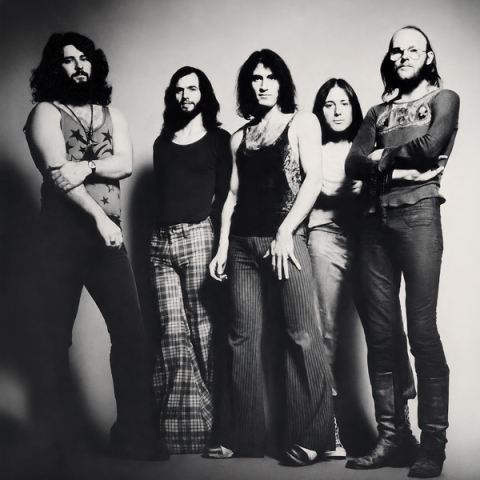
In general, Weiss products are not inexpensive. The Weiss Helios reviewed by JA in March 2024 cost a hair under $22,000 at the time of the review. The Weiss DAC502 cost just under $10,000 when JA reviewed it in the August 2020 issue. That makes the DAC204, the component I'm reviewing, a tantalizing value proposition at $3495, especially considering that it's a Weiss DAC through and through, designed by Daniel and built entirely in Switzerland. What it lacked compared to those more expensive DACs is the converters, nicer chassis, elaborate digital signal processing, and a remote control. When I got confirmation that I would be reviewing the DAC204, I was whistling heavy metal Krokus tunes in my shower for a week.
 The DAC204
Maybe that experience affected my expectations, because when I finally received the DAC204, it didn't seem like heavy metal. The box looked a little small. It felt light in my grip. A big part of that is the absence of iron inside the chassis. Which is to say, it has a switch-mode power supply. "Switch mode" is anathema for some audiophiles. Daniel wrote, in an email, "I often get asked how good the DAC204's power supply is. To answer that, one needs to know that the power fed to the DAC204 is passing through two additional voltage regulators in series before it gets to the analog circuitry. So, the power is cleaned up a lot." The result, according to the Weiss website, is "an analog output free of 'digital noise' and channel crosstalk."
For those who may want their power even cleaner, the company sells the PSU102, an outboard power supply that closely resembles the DAC204. "We have customers telling us that the DAC204 sounds even better with the PSU102," Daniel said. The PSU102 retails for $2695.
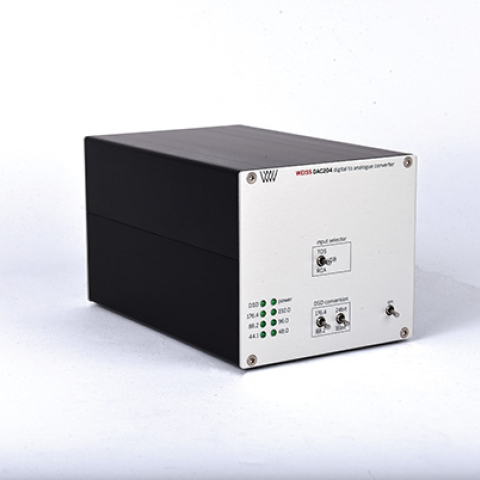
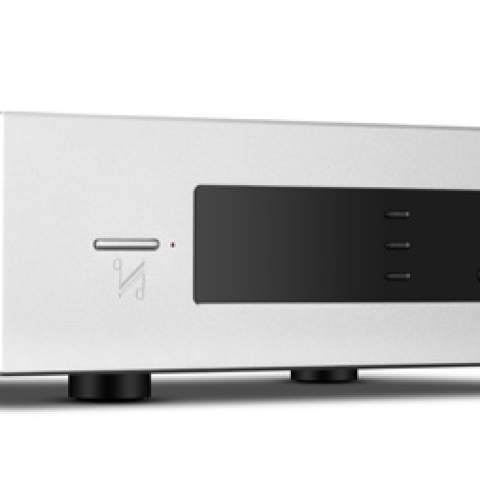
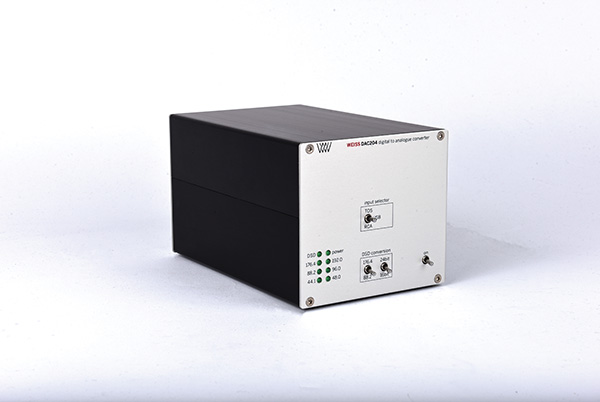
The DAC204 is rather plain looking. Jay Rein of North American Weiss importer Bluebird Music explained, "The casework of the DAC204 is deliberately plain. Some customers might lament the lack of a fancy chassis, but we believe most customers would be glad to know that most of their money is going toward producing the best sound possible and not a fancy, expensive case." Most potential DAC204 buyers, anyway. The DAC204 utilizes the ESS Sabre 9018S chip (which has eight oversampling paralleled sigma-delta D/A converter channels on a single chip) and employs four per channel to optimize the signal/noise ratio. The 204 accepts audio datastreams from any USB-equipped computer, tablet, or mobile phone, but it can't stream music directly from a portable hard drive (footnote 2).
The 204 comes with familiar DAC inputs and outputs but also with some that are less familiar to audiophiles. There is one pair each unbalanced RCA and balanced XLR analog outputs. Digital inputs include S/PDIF on RCA and TosLink (optical) S/PDIF supporting sampling rates up to 192kHz. The single USB input supports signals up to 384kHz, plus DSD64 and DSD128. However, Daniel said: "352.8 and 384kHz frequencies get downsampled to half their value to be compatible with the AES/EBU and S/PDIF specifications." You can choose among these inputs via a switch on the front panel.
 The DAC204 also has digital outputs, specifically S/PDIF over RCA and BNC (one each) and one AES3 out. The 204, then, can be used as a digital/digital processor. For example, it can convert DSD64 or DSD128 to PCM in word lengths of 16-bit or 24-bit or sampling frequencies of 88.2kHz or 176.4kHz. It can send data out to some other device and take it back in again. "It could be useful," said Daniel, "for inserting a digital processor in the signal path," like a digital equalizer: USB into the DAC204 -> DAC204 S/PDIF out to the EQ, then the EQ's S/PDIF output to the DAC204. ... Or the feature could be used to have a USB interface for a second DAC."
Between the 204's USB, RCA, and TosLink inputs, which sounds better—or is expected to? "That question basically refers to clock jitter," Daniel said. "With the USB input, the clock generator sits in the DAC204—the DAC204 tells the computer to send data. That also means that the DAC clock is very clean, as the high-quality generator sits right beside the DAC chip. In the case of the S/PDIF inputs (RCA, TosLink), the DAC204 must extract the clock from the S/PDIF signal and apply some dejittering in case the audio source isn't that good in terms of jitter. The DAC204 has a default setting that provides very high jitter suppression. In some cases, when there is excessive jitter coming from the audio source, that suppression may fail, and clicks in the audio are generated. In those cases, the dejittering can be put to a more jitter-tolerant setting. With the default jitter-suppression setting, the audio quality will be the same for all three inputs."
Also uncommon on civilian DACs: an "analog attenuation" feature, which, via two toggle switches on the back panel, allows the user to lower the DAC's output by 10dB, 20dB, or a combined 30dB with switches on, for a range of maximum output voltage (at 0dBFS digital input) from 0.23V to 7.5V RMS via the balanced output and half those values unbalanced. Why such a wide range? "The sensitivities of preamps and power amps are all over the place," Daniel said, "hence it makes sense to adjust the DAC output level accordingly."
For Windows computer users, a driver is required to play high-rez PCM and DSD files via USB. I downloaded the driver available from the Weiss website and got started.
The DAC204 also has digital outputs, specifically S/PDIF over RCA and BNC (one each) and one AES3 out. The 204, then, can be used as a digital/digital processor. For example, it can convert DSD64 or DSD128 to PCM in word lengths of 16-bit or 24-bit or sampling frequencies of 88.2kHz or 176.4kHz. It can send data out to some other device and take it back in again. "It could be useful," said Daniel, "for inserting a digital processor in the signal path," like a digital equalizer: USB into the DAC204 -> DAC204 S/PDIF out to the EQ, then the EQ's S/PDIF output to the DAC204. ... Or the feature could be used to have a USB interface for a second DAC."
Between the 204's USB, RCA, and TosLink inputs, which sounds better—or is expected to? "That question basically refers to clock jitter," Daniel said. "With the USB input, the clock generator sits in the DAC204—the DAC204 tells the computer to send data. That also means that the DAC clock is very clean, as the high-quality generator sits right beside the DAC chip. In the case of the S/PDIF inputs (RCA, TosLink), the DAC204 must extract the clock from the S/PDIF signal and apply some dejittering in case the audio source isn't that good in terms of jitter. The DAC204 has a default setting that provides very high jitter suppression. In some cases, when there is excessive jitter coming from the audio source, that suppression may fail, and clicks in the audio are generated. In those cases, the dejittering can be put to a more jitter-tolerant setting. With the default jitter-suppression setting, the audio quality will be the same for all three inputs."
Also uncommon on civilian DACs: an "analog attenuation" feature, which, via two toggle switches on the back panel, allows the user to lower the DAC's output by 10dB, 20dB, or a combined 30dB with switches on, for a range of maximum output voltage (at 0dBFS digital input) from 0.23V to 7.5V RMS via the balanced output and half those values unbalanced. Why such a wide range? "The sensitivities of preamps and power amps are all over the place," Daniel said, "hence it makes sense to adjust the DAC output level accordingly."
For Windows computer users, a driver is required to play high-rez PCM and DSD files via USB. I downloaded the driver available from the Weiss website and got started.
 Listening
I began my audition using a transport to play CDs, connecting the Moon 260D CD transport to the Weiss via a Kimber Kable D60 S/PDIF cable. I started with the Mal Waldron Quintet's live album Hard Talk (CD, enja CD 2050-2), specifically the first track, "Snake Out," which opens with ambient hall noise punctuated by a trembling mass of clustered piano tones dealt by Waldron. Those chords reverberated in what sounded like a huge, tunnel-like open space, triggering a frisson of vertigo followed by that familiar pre-concert exhilaration.
Those hard-hit piano chords offered up a believable impersonation of the real thing shuddering in an enclosed, theaterlike space. They even sounded hard—not mechanically but tonally, like what you'd expect a block of piano notes thrust into the keyboard to sound like. They shouldn't sound soft, or rounded; rather, they should sound sharp, dynamic, urgent, and a bit scary. And that is how the 204 reproduced them.
The drums, however, sounded mediocre—as they should; they were recorded that way. Still, the 204 managed to restore some of the illusion that amid the incessant tic-tic-tic of the cymbal taps, an actual human being was tapping them—and it conveyed a convincing sense of where each drum stood in relation to the microphone. Electric bass lines offered a clean sound somewhere between a buzz and a rumble. All those sounds conveyed a sense of the venue's scale and of the volume of air trapped inside it.
Images were solid, with outlines that were clear but not etched. Detail was plentiful and naturally presented. Vocal exclamations, uttered while the music played, sounded unusually intelligible, as if the mike had picked them up properly this time, unlike previously. Manfred Schoof 's cornet and Steve Lacy's soprano sax solos sounded and felt spontaneous, tonally authentic.
 The bracing, realistic sonority of Waldron's piano notes inspired me to reach for Being There by the Tord Gustavsen Trio (CD, ECM 2017 B0008757-02). I was happy I'd picked it. There is considerably more studio reverb surrounding Gustavsen's piano than Waldron's, but both delivered the timbre, dynamic range, harmonic breadth, and character of actual notes taking flight from a hammered string and wooden soundboard. It's no small feat for an audio component to reproduce a piano as well as the 204 did. Not only that: The 204 allowed me to hear how Gustavsen uses finger pressure to give each note its own personality. The delicate notes at the beginning of "At Home" blew across my room in colorfully mutating, tactile, electrified clouds. I felt I could see into the fabric of the sound, into the behavior of the individual sounds as they decayed.
Perhaps the most striking characteristic of the 204 was how it endowed instruments with physical presence, providing each with its own small, deep soundstage within the overarching one. I swore I could hear and see cymbals flash into view, their indented metallic frames wobbling in the air like saucers. Or that I could hear the drumsticks' cylindrical shape as its shaft struck a rim. Technique, timbre, tones appeared on a tiny scale. That's the drug, isn't it? Discovering new things in our recordings? It's musical space travel, and my system with the 204 was my USS Enterprise.
Cymbal taps slipped into fine-grained oblivion. Drum hits popped inside my air space. Before the 204, I'd never realized how good a percussionist Jarle Vespestad is, how skillfully he taps, pounds, rolls, and creates painterly sonic texture across his drum set—snare drum here, mounted tom there, bass drum and cymbals down here and up there, inches apart in the soundstage. I felt a palpable sense of the size of each drum, its periphery, its movements in space, its material texture and tensile strain. Harald Johnsen's double bass tones shifted like tendons on moving limbs, exposing nuanced variations in string texture, finger pressure, and force. The 30th Anniversary Expanded Edition of Santana's eponymous debut album (CD, Columbia / Legacy CK 65489) has three bonus tracks recorded at the Woodstock Festival. One of them is "Soul Sacrifice," whose fiery rendition made up for its lackluster sound quality. The 204 showed me that it had a lot more life in it than I gave it credit for. Via the 204, it sounded big and solid-toned, with fleshed-out images and a stage full of observable activity.
It was easy to see—to visualize—the back-and-forth interplay between keyboardist Gregg Rolie (stage left) and guitarist Carlos Santana (stage right). I found myself trying to hear when, as recounted by Santana himself, the acid Jerry Garcia gave him, which he took before his set, kicked in and (as he has said) rubberized his fretboard. I couldn't hear it (when it took effect or the struggle), but what I did hear—what the 204 gave me—was a bustling live-show atmosphere, a spaciously layered environment, and a keen sense of the musicians' intense, in-the-moment focus, as if they were playing for their lives. The song sounded fresh for a recording made more than 50 years ago over a muddy field in upstate New York.
The bracing, realistic sonority of Waldron's piano notes inspired me to reach for Being There by the Tord Gustavsen Trio (CD, ECM 2017 B0008757-02). I was happy I'd picked it. There is considerably more studio reverb surrounding Gustavsen's piano than Waldron's, but both delivered the timbre, dynamic range, harmonic breadth, and character of actual notes taking flight from a hammered string and wooden soundboard. It's no small feat for an audio component to reproduce a piano as well as the 204 did. Not only that: The 204 allowed me to hear how Gustavsen uses finger pressure to give each note its own personality. The delicate notes at the beginning of "At Home" blew across my room in colorfully mutating, tactile, electrified clouds. I felt I could see into the fabric of the sound, into the behavior of the individual sounds as they decayed.
Perhaps the most striking characteristic of the 204 was how it endowed instruments with physical presence, providing each with its own small, deep soundstage within the overarching one. I swore I could hear and see cymbals flash into view, their indented metallic frames wobbling in the air like saucers. Or that I could hear the drumsticks' cylindrical shape as its shaft struck a rim. Technique, timbre, tones appeared on a tiny scale. That's the drug, isn't it? Discovering new things in our recordings? It's musical space travel, and my system with the 204 was my USS Enterprise.
Cymbal taps slipped into fine-grained oblivion. Drum hits popped inside my air space. Before the 204, I'd never realized how good a percussionist Jarle Vespestad is, how skillfully he taps, pounds, rolls, and creates painterly sonic texture across his drum set—snare drum here, mounted tom there, bass drum and cymbals down here and up there, inches apart in the soundstage. I felt a palpable sense of the size of each drum, its periphery, its movements in space, its material texture and tensile strain. Harald Johnsen's double bass tones shifted like tendons on moving limbs, exposing nuanced variations in string texture, finger pressure, and force. The 30th Anniversary Expanded Edition of Santana's eponymous debut album (CD, Columbia / Legacy CK 65489) has three bonus tracks recorded at the Woodstock Festival. One of them is "Soul Sacrifice," whose fiery rendition made up for its lackluster sound quality. The 204 showed me that it had a lot more life in it than I gave it credit for. Via the 204, it sounded big and solid-toned, with fleshed-out images and a stage full of observable activity.
It was easy to see—to visualize—the back-and-forth interplay between keyboardist Gregg Rolie (stage left) and guitarist Carlos Santana (stage right). I found myself trying to hear when, as recounted by Santana himself, the acid Jerry Garcia gave him, which he took before his set, kicked in and (as he has said) rubberized his fretboard. I couldn't hear it (when it took effect or the struggle), but what I did hear—what the 204 gave me—was a bustling live-show atmosphere, a spaciously layered environment, and a keen sense of the musicians' intense, in-the-moment focus, as if they were playing for their lives. The song sounded fresh for a recording made more than 50 years ago over a muddy field in upstate New York.
 Santana's Woodstock-performed "Soul Sacrifice" led into Radiohead's I Might Be Wrong: Live Recordings (CD, EMI 7243 5 36616 2 5). I Might Be Wrong wasn't meant to sound live—or even from this planet. It was designed to provide a wall of sound, real and manufactured, and that's how the 204 served it to me: on a hotplate of glittering, swirling, interstellar effects interweaved with an actual reverb-drenched rock concert.
The album's first track, "The National Anthem," spread out beyond my speakers as wide as an orca's mouth. The sound filled the air in front of me with an energized, layered tapestry of parts moving at high speed. Colin Greenwood's buzzing bass sliced the room in half from floor to ceiling pipes, while Thom Yorke's digitally morphed, warbling vocals sounded eerily translucent even as they stayed solidly anchored. It sounded simultaneously fake and authentic—a tribute to the 204's transparency and faithfulness to this deliciously processed music. Above all, "The National Anthem" sounded intentional—as in, as it was intended—and also immense, colorfully engorged, and aesthetically seamless.
The 204's high-end pedigree was cemented with hi-rez material. But first a tiny stumble. DAC204 didn't appear as an output device in Roon's Audio tab, so I clicked instead on the WASAPI interface option instead. This lit up the DSD and 192kHz LED lights on the 204's front panel and brought the sound I heard from a DSD-encoded file of Thelonious Monk's Straight, No Chaser and a 24/192 FLAC file of CSNY's Déjà Vu to another level of sophistication compared to Red Book—more palpable, larger in scale, with a more spacious soundstage and better developed images. Notes heard in hi-rez had more lower-body presence than CDs and sounded a bit more harmonically complete.
Santana's Woodstock-performed "Soul Sacrifice" led into Radiohead's I Might Be Wrong: Live Recordings (CD, EMI 7243 5 36616 2 5). I Might Be Wrong wasn't meant to sound live—or even from this planet. It was designed to provide a wall of sound, real and manufactured, and that's how the 204 served it to me: on a hotplate of glittering, swirling, interstellar effects interweaved with an actual reverb-drenched rock concert.
The album's first track, "The National Anthem," spread out beyond my speakers as wide as an orca's mouth. The sound filled the air in front of me with an energized, layered tapestry of parts moving at high speed. Colin Greenwood's buzzing bass sliced the room in half from floor to ceiling pipes, while Thom Yorke's digitally morphed, warbling vocals sounded eerily translucent even as they stayed solidly anchored. It sounded simultaneously fake and authentic—a tribute to the 204's transparency and faithfulness to this deliciously processed music. Above all, "The National Anthem" sounded intentional—as in, as it was intended—and also immense, colorfully engorged, and aesthetically seamless.
The 204's high-end pedigree was cemented with hi-rez material. But first a tiny stumble. DAC204 didn't appear as an output device in Roon's Audio tab, so I clicked instead on the WASAPI interface option instead. This lit up the DSD and 192kHz LED lights on the 204's front panel and brought the sound I heard from a DSD-encoded file of Thelonious Monk's Straight, No Chaser and a 24/192 FLAC file of CSNY's Déjà Vu to another level of sophistication compared to Red Book—more palpable, larger in scale, with a more spacious soundstage and better developed images. Notes heard in hi-rez had more lower-body presence than CDs and sounded a bit more harmonically complete.
 I thought CDs through the 204 sounded free of distortion—but somehow, the hi-rez content sounded even more distortion-free. The harmony vocals on Déjà Vu's "Carry On" had never sounded this natural, steady, and spatially detailed. In fact, I was surprised that this file sounded this good, because it never had before, even through other components capable of 24/192 playback. I used to think this recording sounded flat, dynamically and spatially, but the 204 showed otherwise by revealing how much dynamic and spatial life I'd been missing.
Forgive the cliché, but throughout my time with the 204, I discovered new things in familiar albums, or at least things made more obvious, such as Neil Young's fingerpicking technique in guitar solos. I'm not sure it had ever occurred to me that he wasn't using a pick, but now it was obvious: that snappy, slightly dull tone of a string being yanked rather than plucked. Neil's electric guitar was also more holographic, providing a better perspective on its angles, shape, and Neil's grip. The organ solo was not only ensconced deep into my room as I'd never heard it before; the chordal melody sounded almost liturgical. Where did that come from?
The Thelonious Monk DSD file shared sonic similarities with the PCM one—huge, palpable images, tonal ripeness, natural timbre, and a sphere-like soundstage (appropriate for Thelonious "Sphere" Monk) marked by layers of distance. I'd never heard Monk's piano notes—nor those of Charlie Rouse's saxophone—sound this vibrant, explicit, or realistic on CD.
The Wrap
I thought CDs through the 204 sounded free of distortion—but somehow, the hi-rez content sounded even more distortion-free. The harmony vocals on Déjà Vu's "Carry On" had never sounded this natural, steady, and spatially detailed. In fact, I was surprised that this file sounded this good, because it never had before, even through other components capable of 24/192 playback. I used to think this recording sounded flat, dynamically and spatially, but the 204 showed otherwise by revealing how much dynamic and spatial life I'd been missing.
Forgive the cliché, but throughout my time with the 204, I discovered new things in familiar albums, or at least things made more obvious, such as Neil Young's fingerpicking technique in guitar solos. I'm not sure it had ever occurred to me that he wasn't using a pick, but now it was obvious: that snappy, slightly dull tone of a string being yanked rather than plucked. Neil's electric guitar was also more holographic, providing a better perspective on its angles, shape, and Neil's grip. The organ solo was not only ensconced deep into my room as I'd never heard it before; the chordal melody sounded almost liturgical. Where did that come from?
The Thelonious Monk DSD file shared sonic similarities with the PCM one—huge, palpable images, tonal ripeness, natural timbre, and a sphere-like soundstage (appropriate for Thelonious "Sphere" Monk) marked by layers of distance. I'd never heard Monk's piano notes—nor those of Charlie Rouse's saxophone—sound this vibrant, explicit, or realistic on CD.
The Wrap
The Weiss DAC204 allows me to hear deep into recordings. Its presentation has an analog-like flow, but it doesn't sound analog. Rather, it sounds digital but ultraclean, vivid, and pure. Quality hi-fi is a recipe of matching qualities, as they pertain to the model's design, construction, function, and sonic attributes. Our hobby isn't just about sound any more than a novel is just about words. Both recorded music and written words are meant to paint a picture in our minds. The better the audio and writing, the more vivid the picture.
The DAC204 paints vividly indeed. It paints a picture that brings the music on each recording more into focus. It delivers sustained musicality and timbral authenticity. In sum, it sounds like it was designed by a digital guru—a wizard—and made in a place like Switzerland, with mountains and pristine lakes and valleys. I'm sure Krokus would have a blast hearing their music through it.
Footnote 1: DASH stands for Digital Audio Stationary Head. It was a professional, multitrack, digital reel-to-reel recorder developed by Studer in collaboration with Sony. Like analog recorders, DASH recorders used a stationary recording head, in contrast to DAT recorders, which used rotating heads. Footnote 2: Or anyway, not without assistance. The trick is to turn the computer the disc is attached to into a UPnP/DLNA server. Software is available to do exactly that. An example is Asset UPnP from the makers of dBpoweramp. It can run under Windows, Linux, or Mac OS (11 Big Sur or newer) as well as certain NAS operating systems (Synology, QNAP) and Raspberry Pi.x
The DAC204Maybe that experience affected my expectations, because when I finally received the DAC204, it didn't seem like heavy metal. The box looked a little small. It felt light in my grip. A big part of that is the absence of iron inside the chassis. Which is to say, it has a switch-mode power supply. "Switch mode" is anathema for some audiophiles. Daniel wrote, in an email, "I often get asked how good the DAC204's power supply is. To answer that, one needs to know that the power fed to the DAC204 is passing through two additional voltage regulators in series before it gets to the analog circuitry. So, the power is cleaned up a lot." The result, according to the Weiss website, is "an analog output free of 'digital noise' and channel crosstalk."
The DAC204 also has digital outputs, specifically S/PDIF over RCA and BNC (one each) and one AES3 out. The 204, then, can be used as a digital/digital processor. For example, it can convert DSD64 or DSD128 to PCM in word lengths of 16-bit or 24-bit or sampling frequencies of 88.2kHz or 176.4kHz. It can send data out to some other device and take it back in again. "It could be useful," said Daniel, "for inserting a digital processor in the signal path," like a digital equalizer: USB into the DAC204 -> DAC204 S/PDIF out to the EQ, then the EQ's S/PDIF output to the DAC204. ... Or the feature could be used to have a USB interface for a second DAC."
Between the 204's USB, RCA, and TosLink inputs, which sounds better—or is expected to? "That question basically refers to clock jitter," Daniel said. "With the USB input, the clock generator sits in the DAC204—the DAC204 tells the computer to send data. That also means that the DAC clock is very clean, as the high-quality generator sits right beside the DAC chip. In the case of the S/PDIF inputs (RCA, TosLink), the DAC204 must extract the clock from the S/PDIF signal and apply some dejittering in case the audio source isn't that good in terms of jitter. The DAC204 has a default setting that provides very high jitter suppression. In some cases, when there is excessive jitter coming from the audio source, that suppression may fail, and clicks in the audio are generated. In those cases, the dejittering can be put to a more jitter-tolerant setting. With the default jitter-suppression setting, the audio quality will be the same for all three inputs."
Also uncommon on civilian DACs: an "analog attenuation" feature, which, via two toggle switches on the back panel, allows the user to lower the DAC's output by 10dB, 20dB, or a combined 30dB with switches on, for a range of maximum output voltage (at 0dBFS digital input) from 0.23V to 7.5V RMS via the balanced output and half those values unbalanced. Why such a wide range? "The sensitivities of preamps and power amps are all over the place," Daniel said, "hence it makes sense to adjust the DAC output level accordingly."
ListeningI began my audition using a transport to play CDs, connecting the Moon 260D CD transport to the Weiss via a Kimber Kable D60 S/PDIF cable. I started with the Mal Waldron Quintet's live album Hard Talk (CD, enja CD 2050-2), specifically the first track, "Snake Out," which opens with ambient hall noise punctuated by a trembling mass of clustered piano tones dealt by Waldron. Those chords reverberated in what sounded like a huge, tunnel-like open space, triggering a frisson of vertigo followed by that familiar pre-concert exhilaration.
The bracing, realistic sonority of Waldron's piano notes inspired me to reach for Being There by the Tord Gustavsen Trio (CD, ECM 2017 B0008757-02). I was happy I'd picked it. There is considerably more studio reverb surrounding Gustavsen's piano than Waldron's, but both delivered the timbre, dynamic range, harmonic breadth, and character of actual notes taking flight from a hammered string and wooden soundboard. It's no small feat for an audio component to reproduce a piano as well as the 204 did. Not only that: The 204 allowed me to hear how Gustavsen uses finger pressure to give each note its own personality. The delicate notes at the beginning of "At Home" blew across my room in colorfully mutating, tactile, electrified clouds. I felt I could see into the fabric of the sound, into the behavior of the individual sounds as they decayed.
Perhaps the most striking characteristic of the 204 was how it endowed instruments with physical presence, providing each with its own small, deep soundstage within the overarching one. I swore I could hear and see cymbals flash into view, their indented metallic frames wobbling in the air like saucers. Or that I could hear the drumsticks' cylindrical shape as its shaft struck a rim. Technique, timbre, tones appeared on a tiny scale. That's the drug, isn't it? Discovering new things in our recordings? It's musical space travel, and my system with the 204 was my USS Enterprise.
Cymbal taps slipped into fine-grained oblivion. Drum hits popped inside my air space. Before the 204, I'd never realized how good a percussionist Jarle Vespestad is, how skillfully he taps, pounds, rolls, and creates painterly sonic texture across his drum set—snare drum here, mounted tom there, bass drum and cymbals down here and up there, inches apart in the soundstage. I felt a palpable sense of the size of each drum, its periphery, its movements in space, its material texture and tensile strain. Harald Johnsen's double bass tones shifted like tendons on moving limbs, exposing nuanced variations in string texture, finger pressure, and force. The 30th Anniversary Expanded Edition of Santana's eponymous debut album (CD, Columbia / Legacy CK 65489) has three bonus tracks recorded at the Woodstock Festival. One of them is "Soul Sacrifice," whose fiery rendition made up for its lackluster sound quality. The 204 showed me that it had a lot more life in it than I gave it credit for. Via the 204, it sounded big and solid-toned, with fleshed-out images and a stage full of observable activity.
Santana's Woodstock-performed "Soul Sacrifice" led into Radiohead's I Might Be Wrong: Live Recordings (CD, EMI 7243 5 36616 2 5). I Might Be Wrong wasn't meant to sound live—or even from this planet. It was designed to provide a wall of sound, real and manufactured, and that's how the 204 served it to me: on a hotplate of glittering, swirling, interstellar effects interweaved with an actual reverb-drenched rock concert.
The album's first track, "The National Anthem," spread out beyond my speakers as wide as an orca's mouth. The sound filled the air in front of me with an energized, layered tapestry of parts moving at high speed. Colin Greenwood's buzzing bass sliced the room in half from floor to ceiling pipes, while Thom Yorke's digitally morphed, warbling vocals sounded eerily translucent even as they stayed solidly anchored. It sounded simultaneously fake and authentic—a tribute to the 204's transparency and faithfulness to this deliciously processed music. Above all, "The National Anthem" sounded intentional—as in, as it was intended—and also immense, colorfully engorged, and aesthetically seamless.
I thought CDs through the 204 sounded free of distortion—but somehow, the hi-rez content sounded even more distortion-free. The harmony vocals on Déjà Vu's "Carry On" had never sounded this natural, steady, and spatially detailed. In fact, I was surprised that this file sounded this good, because it never had before, even through other components capable of 24/192 playback. I used to think this recording sounded flat, dynamically and spatially, but the 204 showed otherwise by revealing how much dynamic and spatial life I'd been missing.
Forgive the cliché, but throughout my time with the 204, I discovered new things in familiar albums, or at least things made more obvious, such as Neil Young's fingerpicking technique in guitar solos. I'm not sure it had ever occurred to me that he wasn't using a pick, but now it was obvious: that snappy, slightly dull tone of a string being yanked rather than plucked. Neil's electric guitar was also more holographic, providing a better perspective on its angles, shape, and Neil's grip. The organ solo was not only ensconced deep into my room as I'd never heard it before; the chordal melody sounded almost liturgical. Where did that come from?
The Weiss DAC204 allows me to hear deep into recordings. Its presentation has an analog-like flow, but it doesn't sound analog. Rather, it sounds digital but ultraclean, vivid, and pure. Quality hi-fi is a recipe of matching qualities, as they pertain to the model's design, construction, function, and sonic attributes. Our hobby isn't just about sound any more than a novel is just about words. Both recorded music and written words are meant to paint a picture in our minds. The better the audio and writing, the more vivid the picture.
Footnote 1: DASH stands for Digital Audio Stationary Head. It was a professional, multitrack, digital reel-to-reel recorder developed by Studer in collaboration with Sony. Like analog recorders, DASH recorders used a stationary recording head, in contrast to DAT recorders, which used rotating heads. Footnote 2: Or anyway, not without assistance. The trick is to turn the computer the disc is attached to into a UPnP/DLNA server. Software is available to do exactly that. An example is Asset UPnP from the makers of dBpoweramp. It can run under Windows, Linux, or Mac OS (11 Big Sur or newer) as well as certain NAS operating systems (Synology, QNAP) and Raspberry Pi.x